Approach
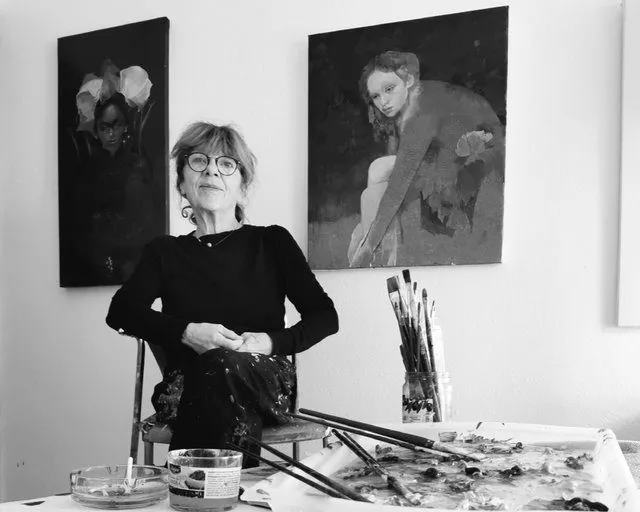
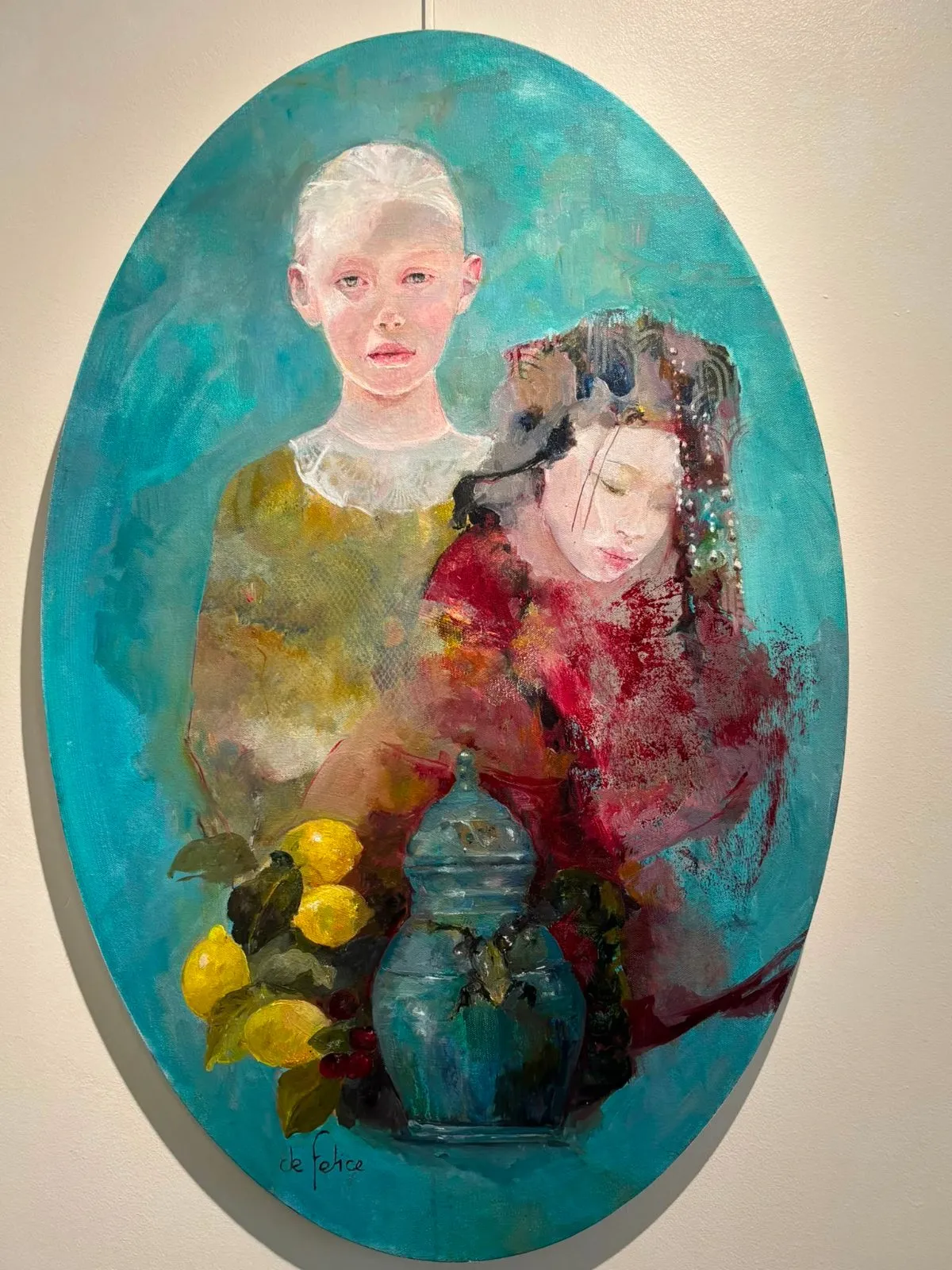
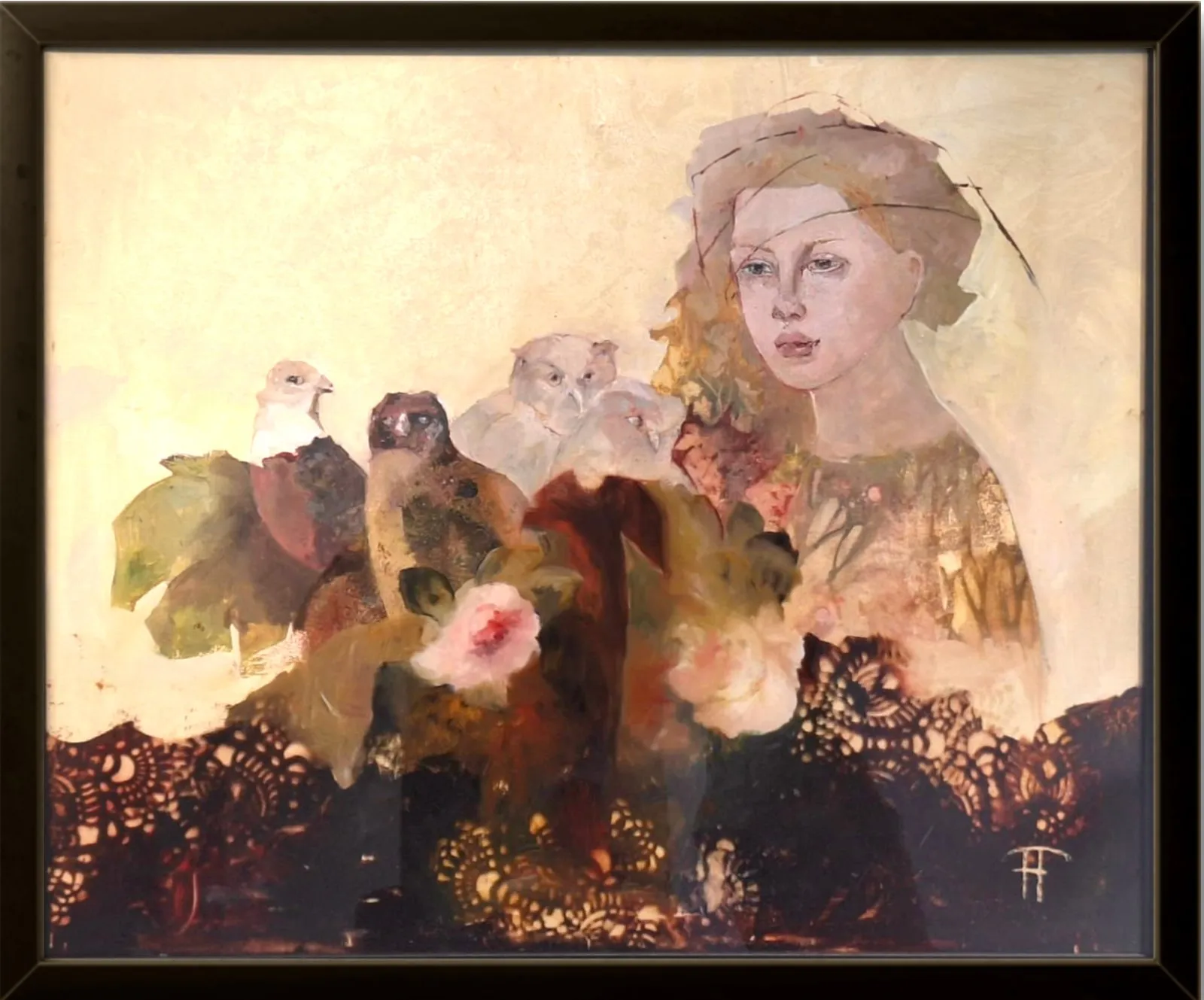
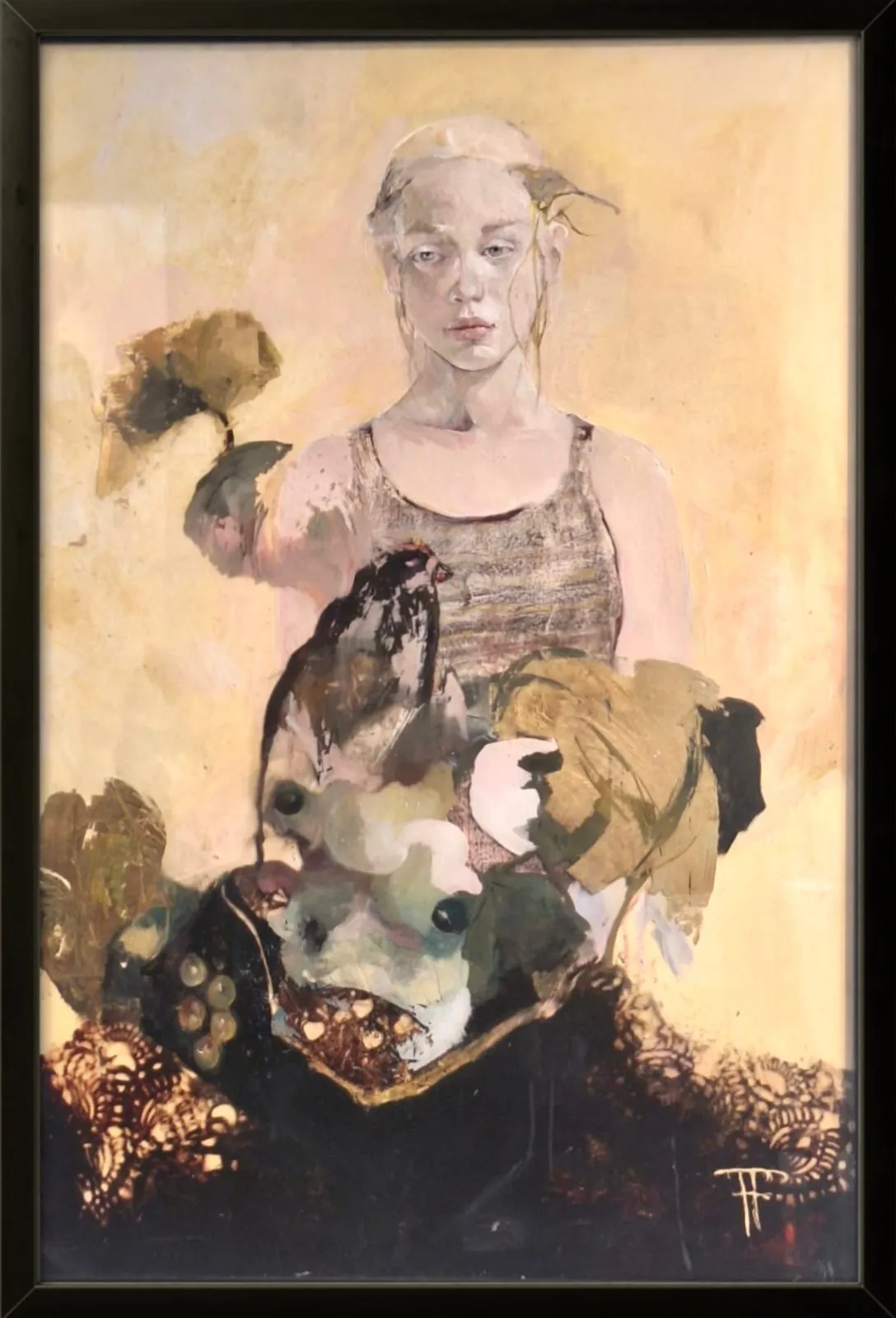
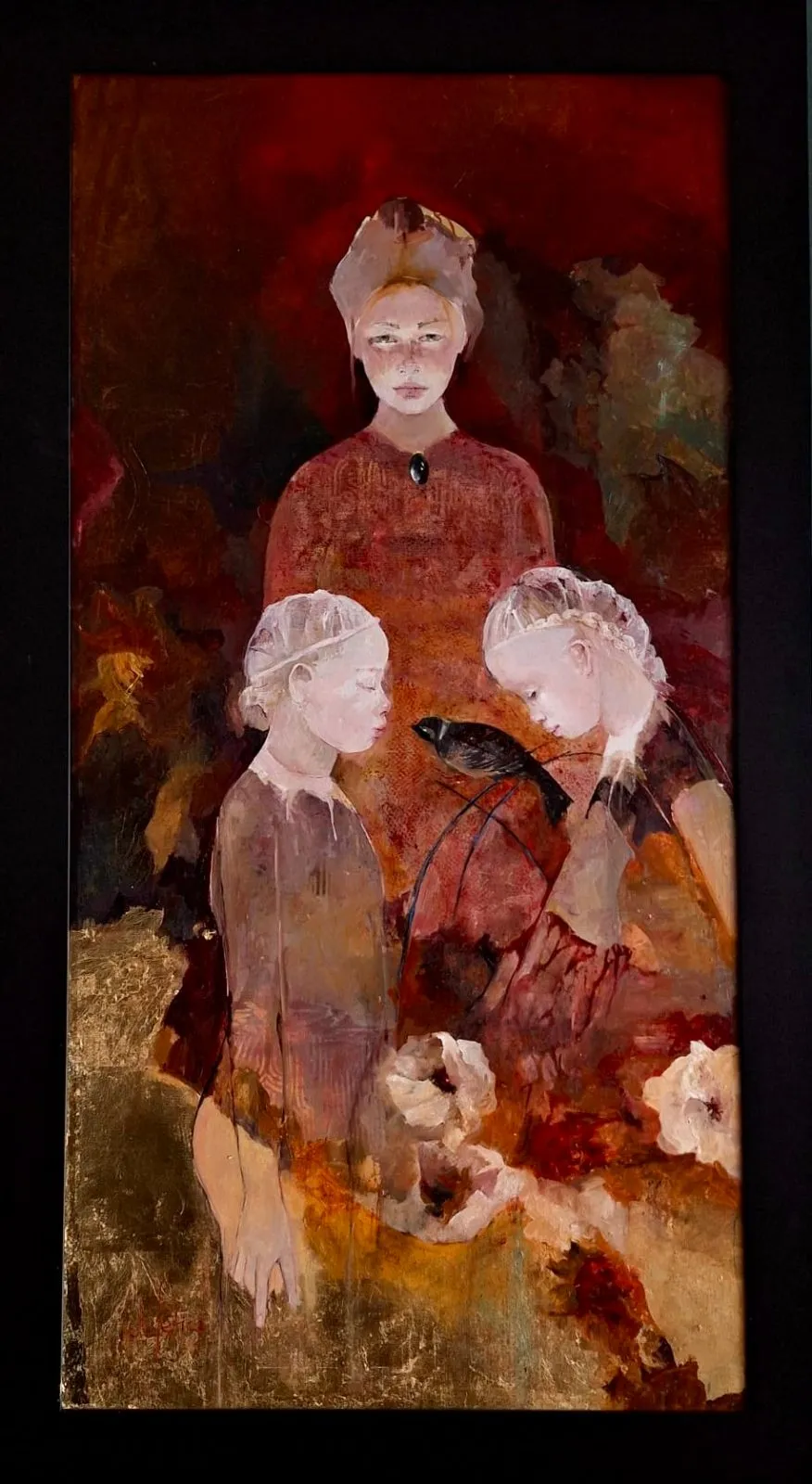
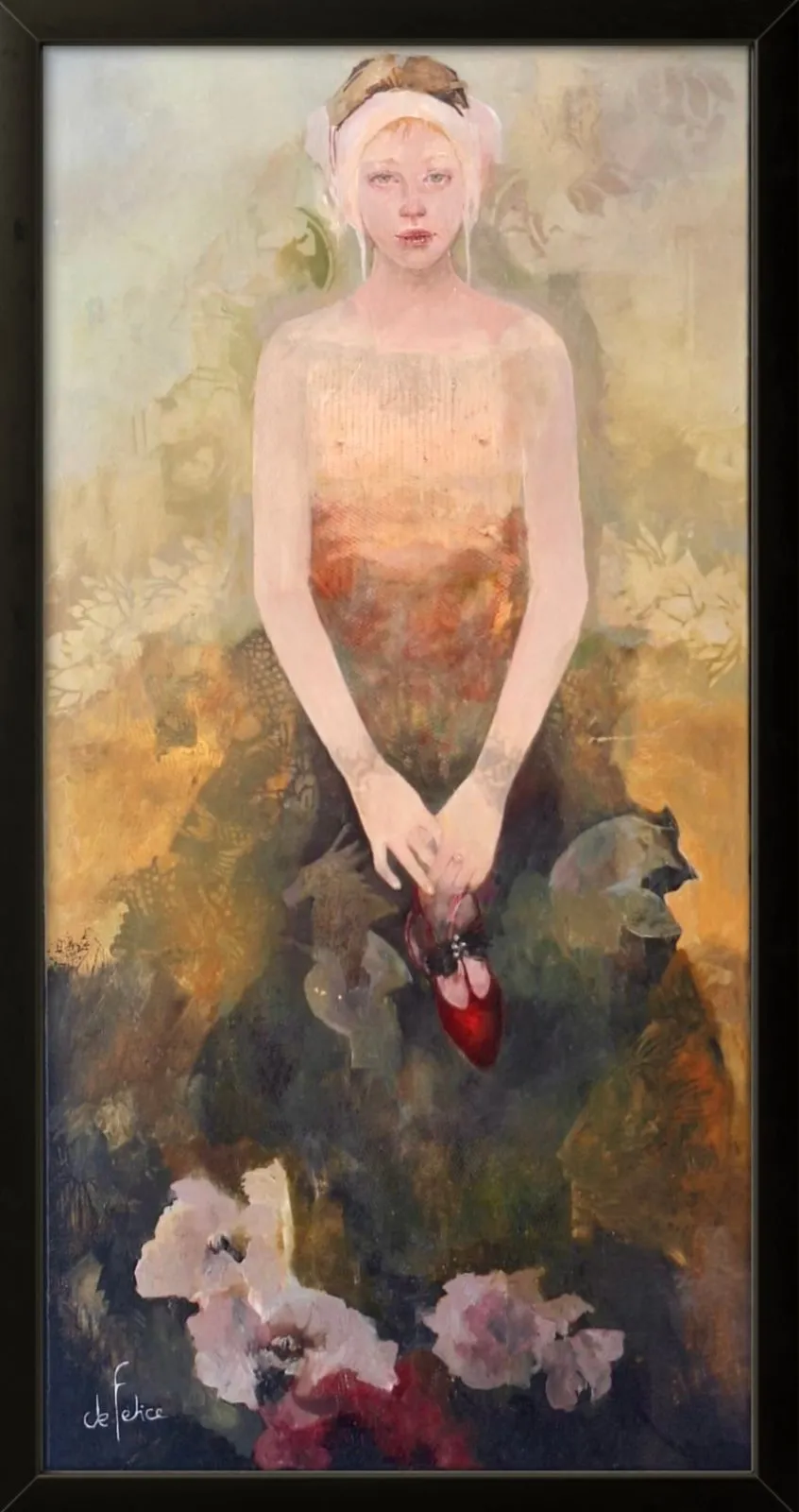
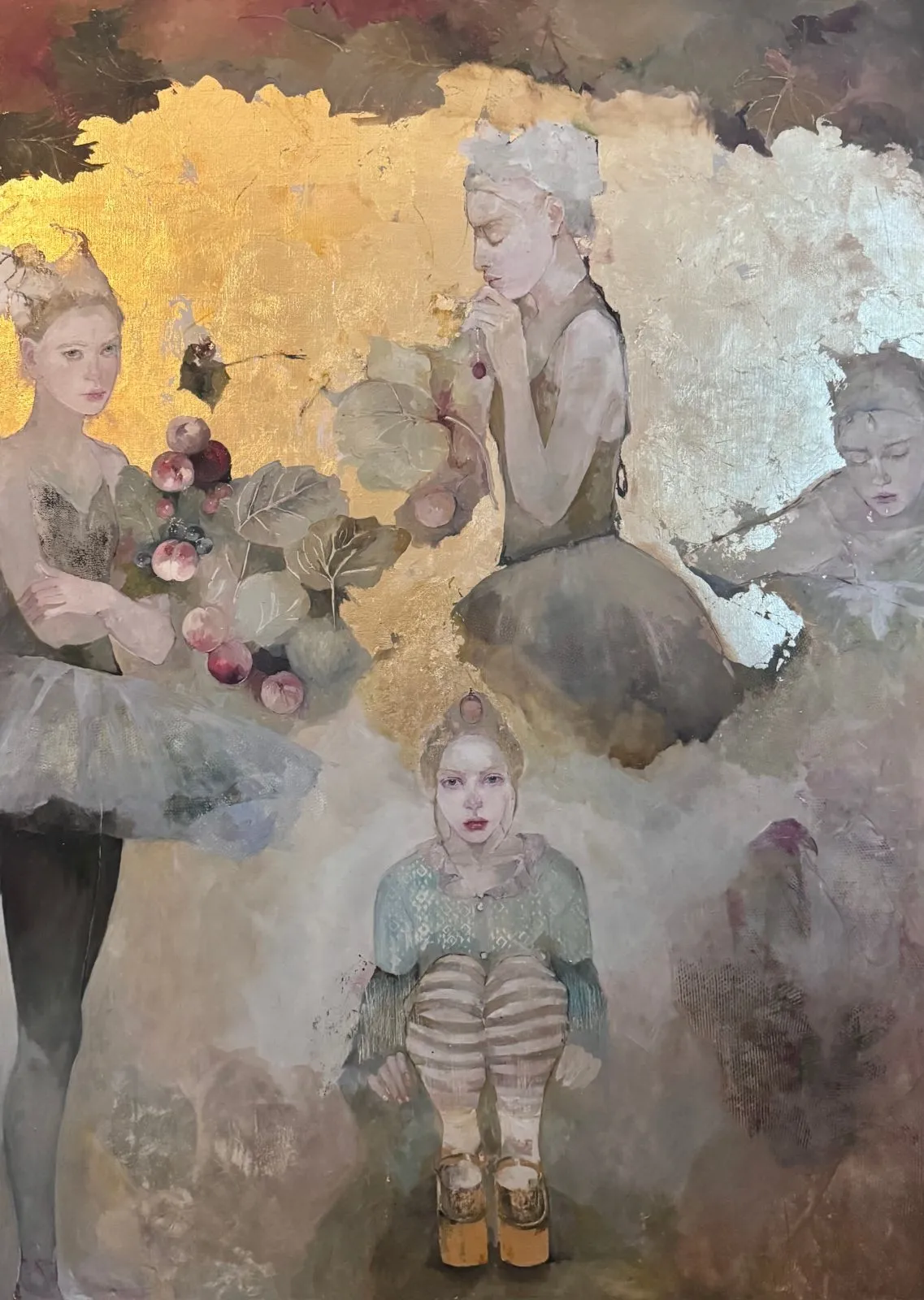
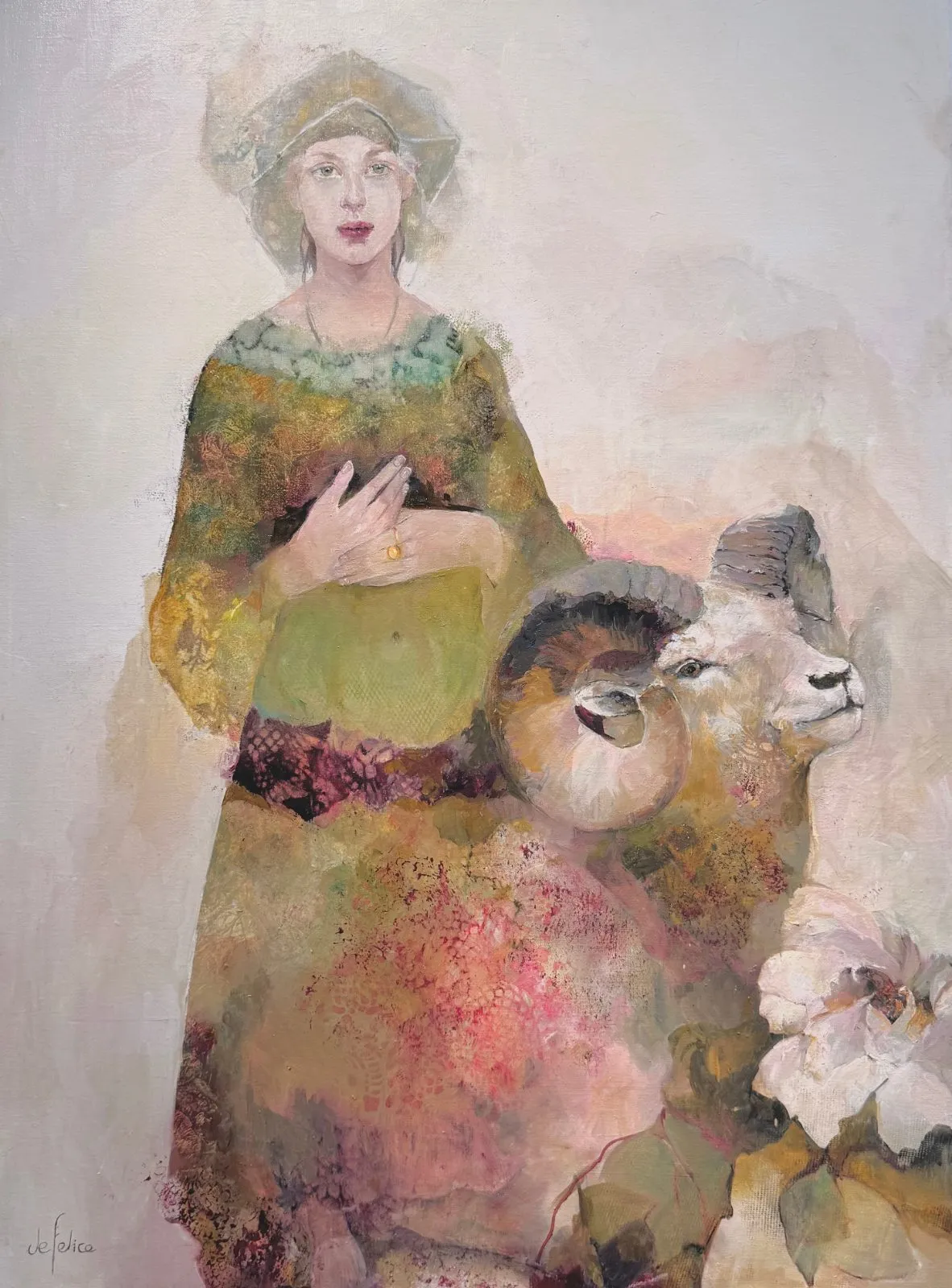
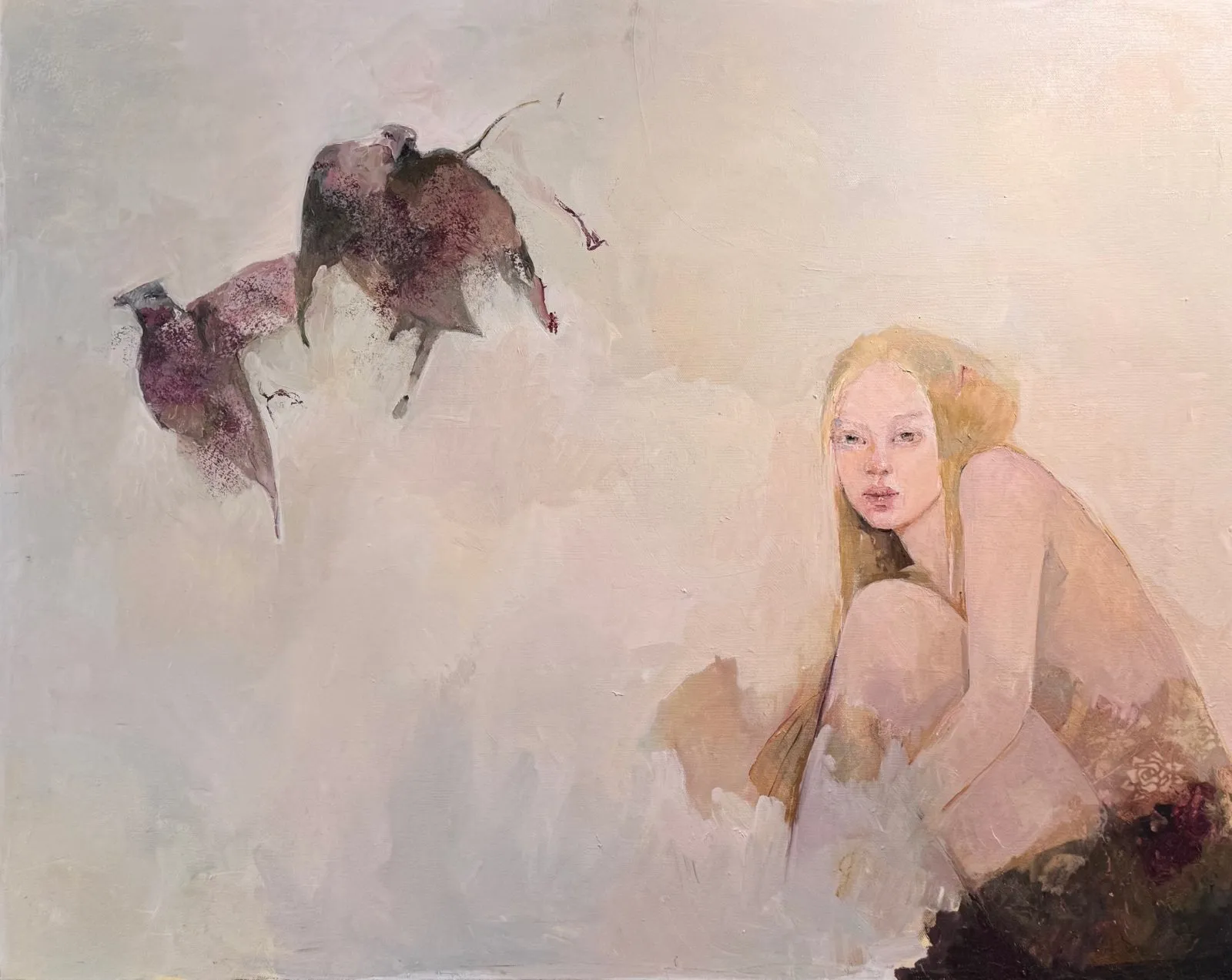
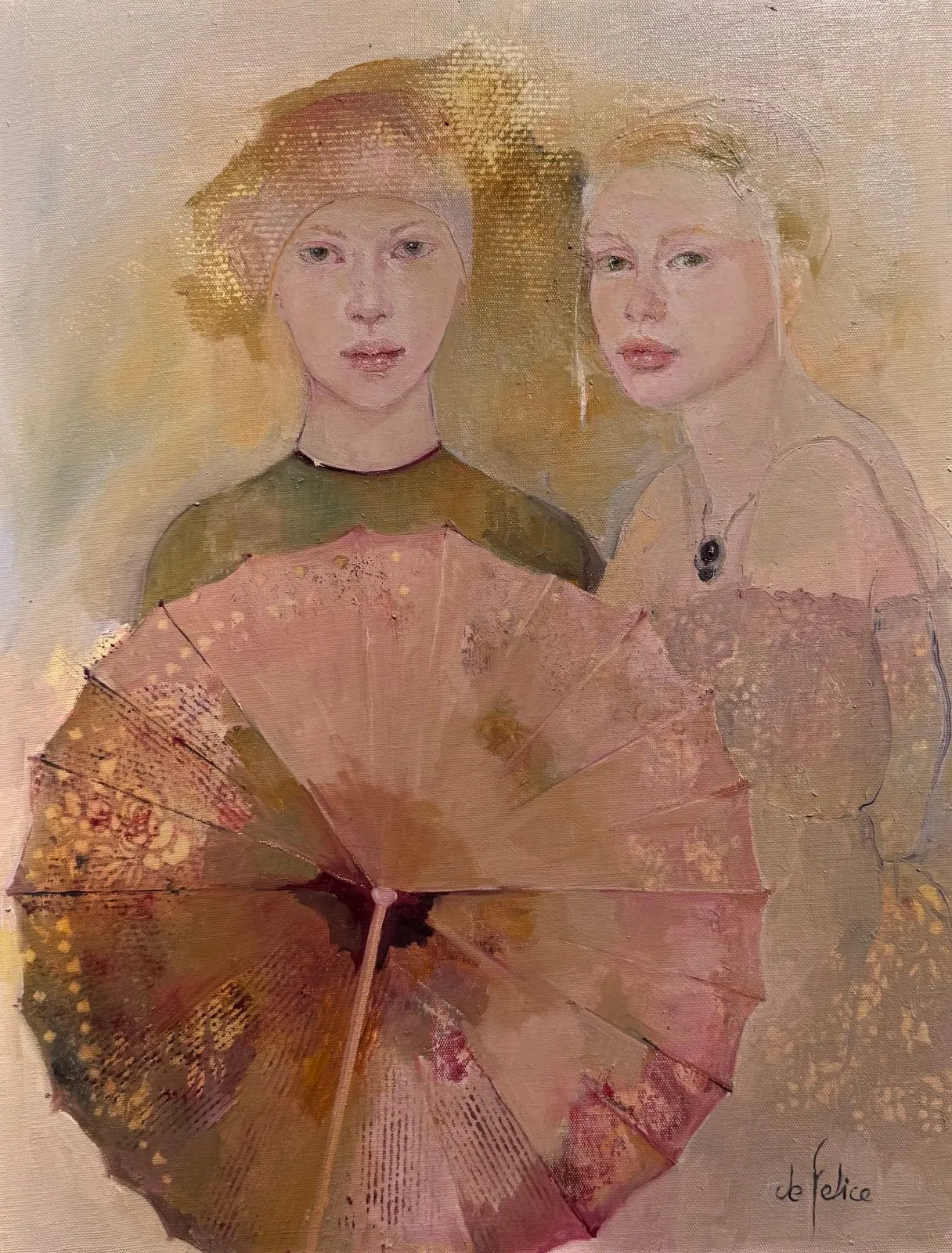
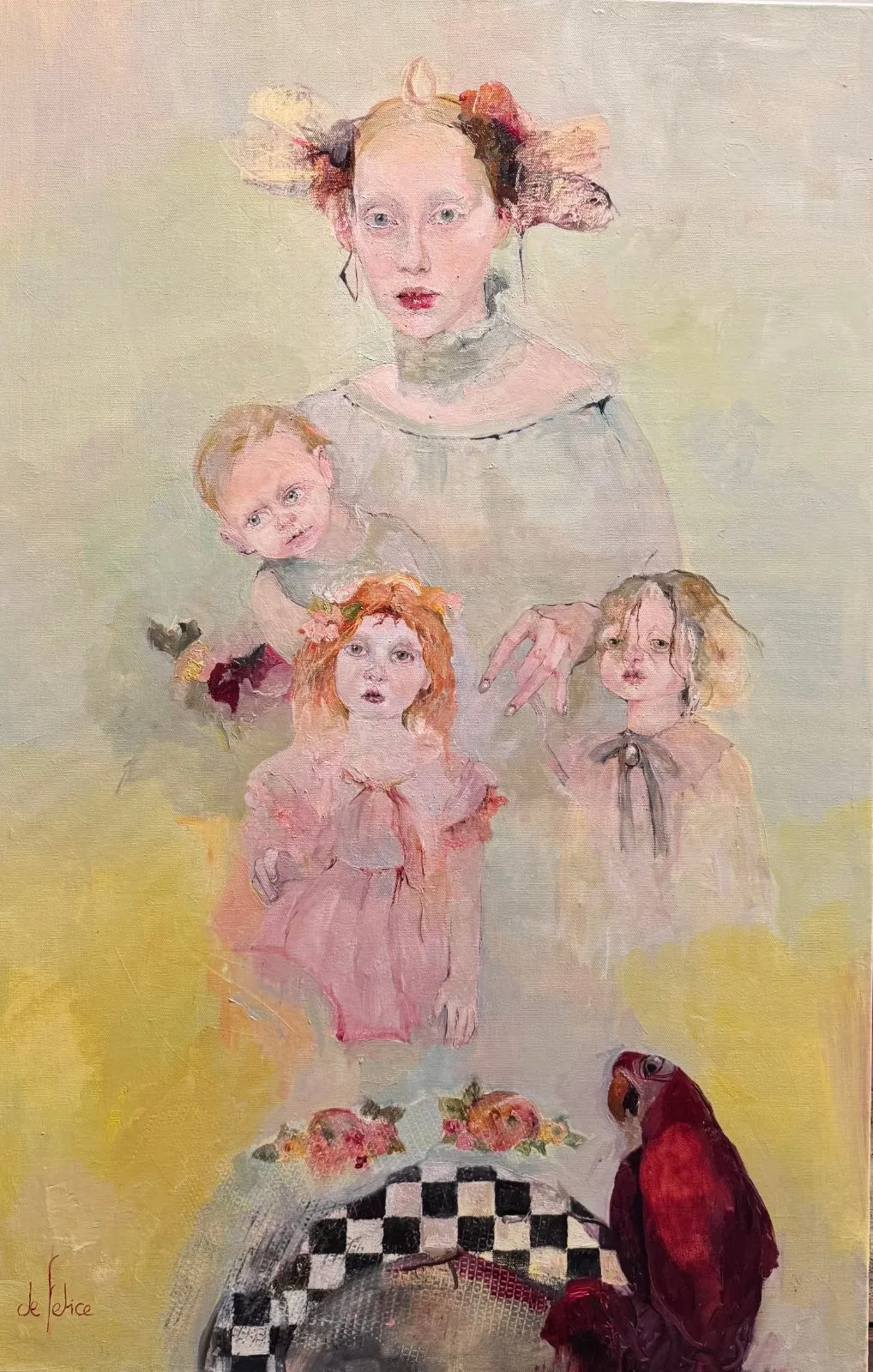
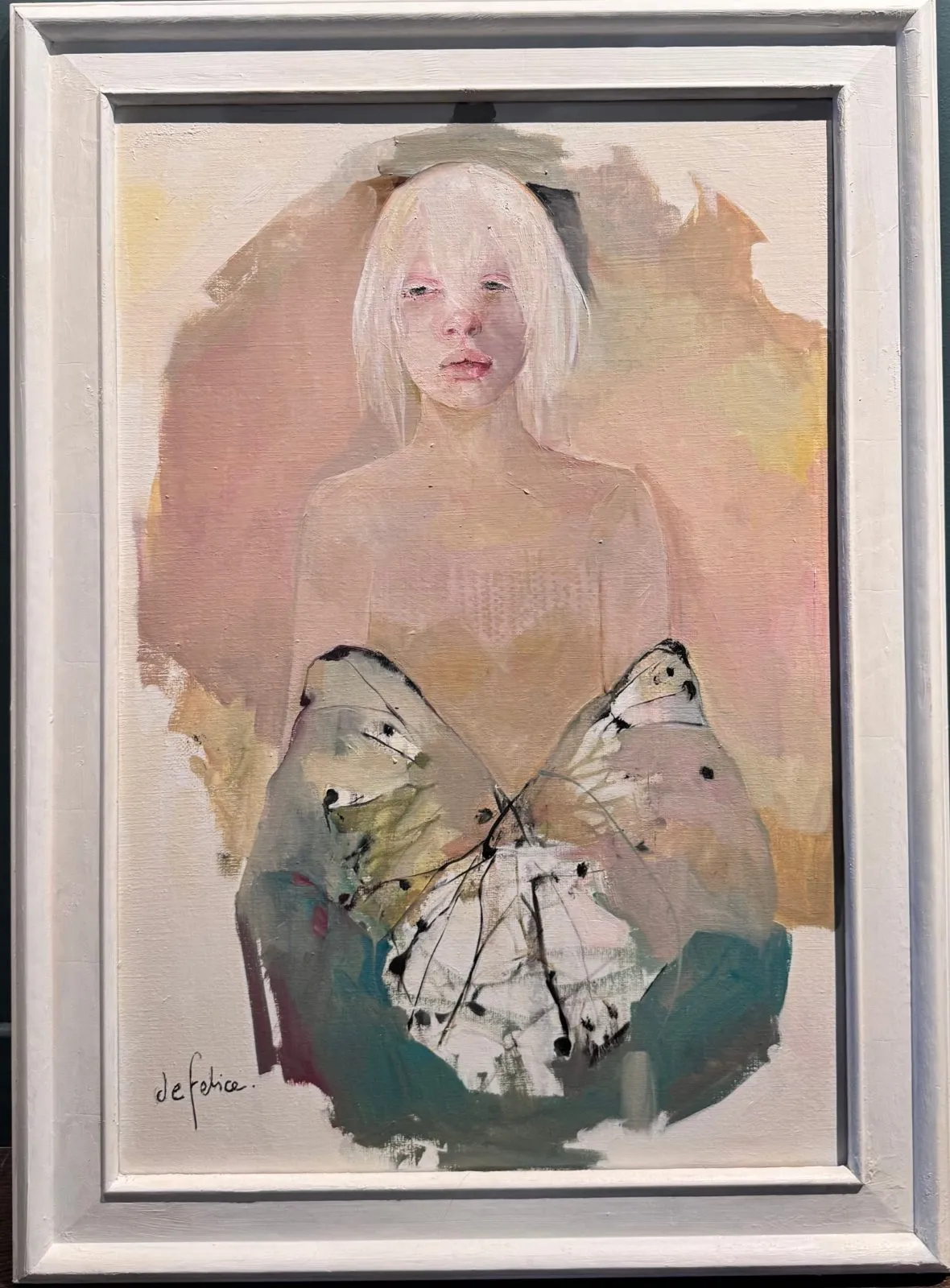
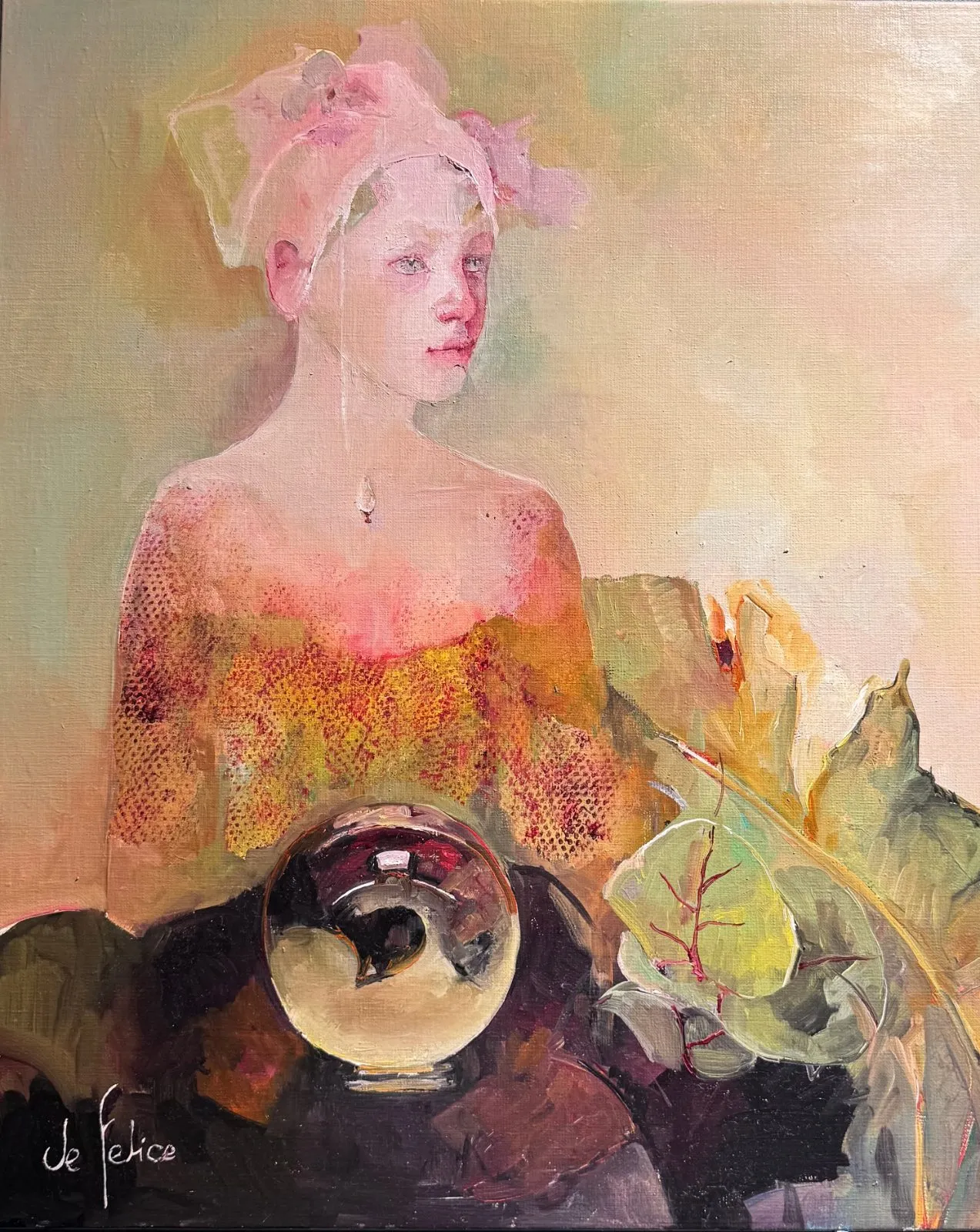
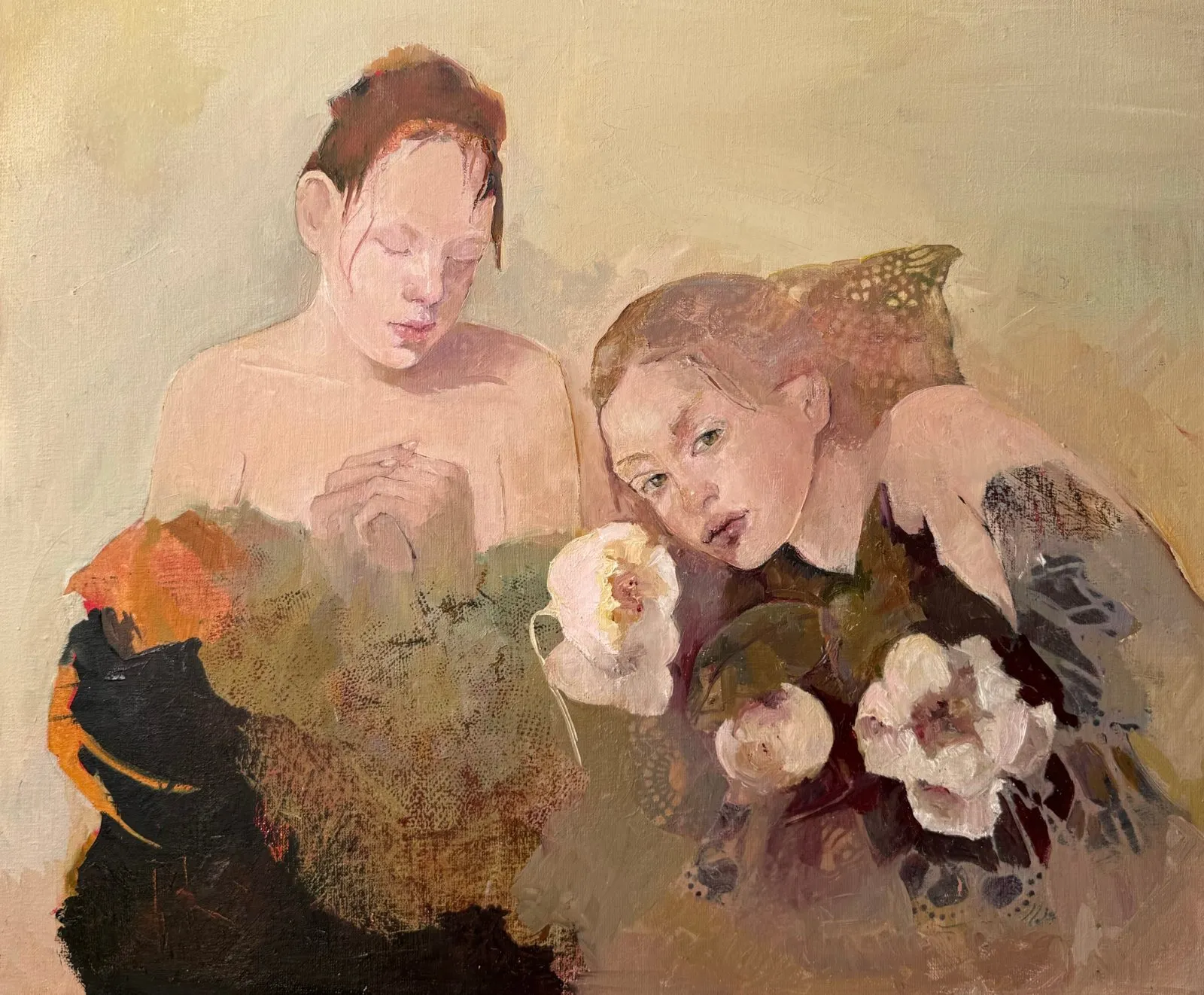
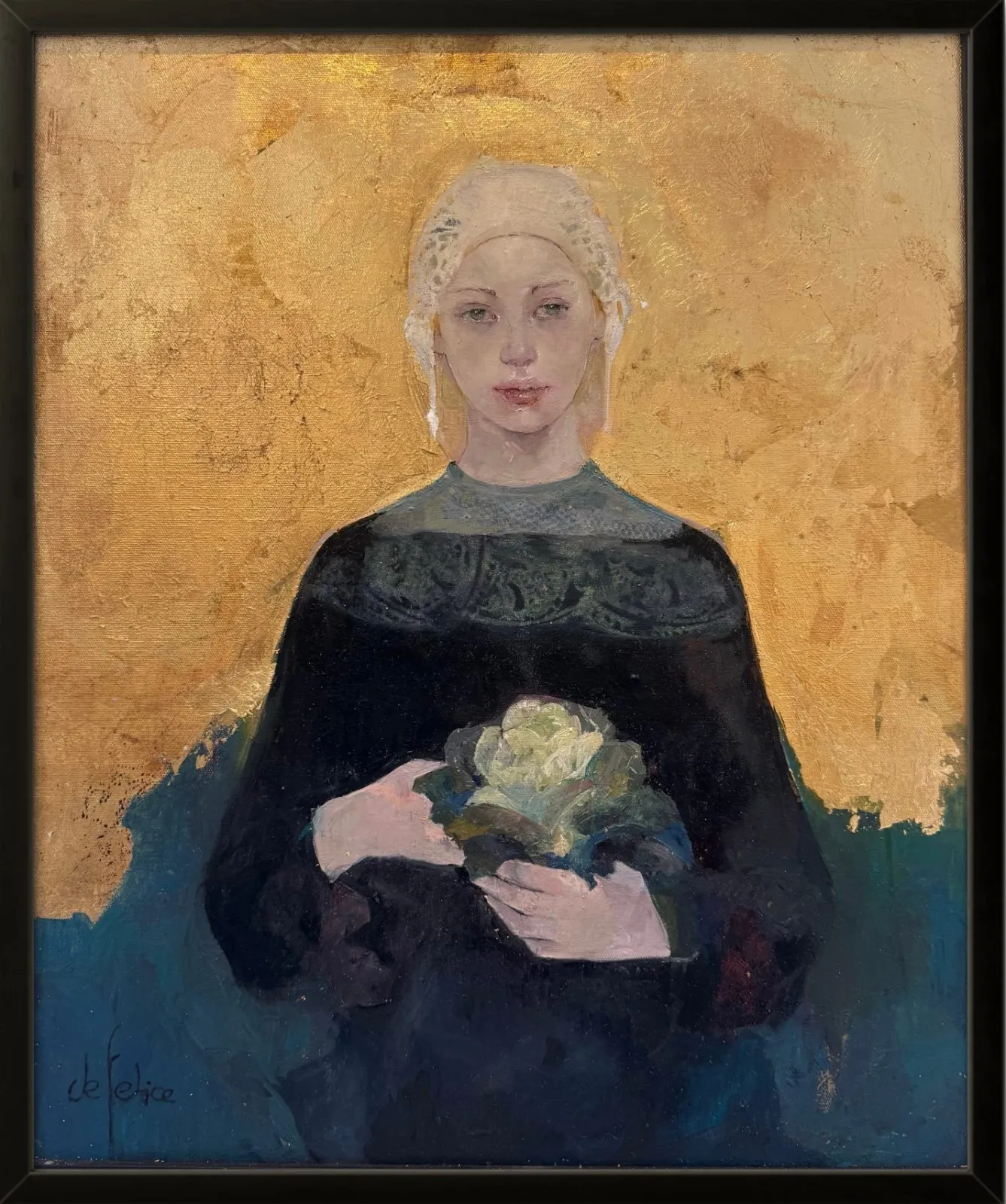
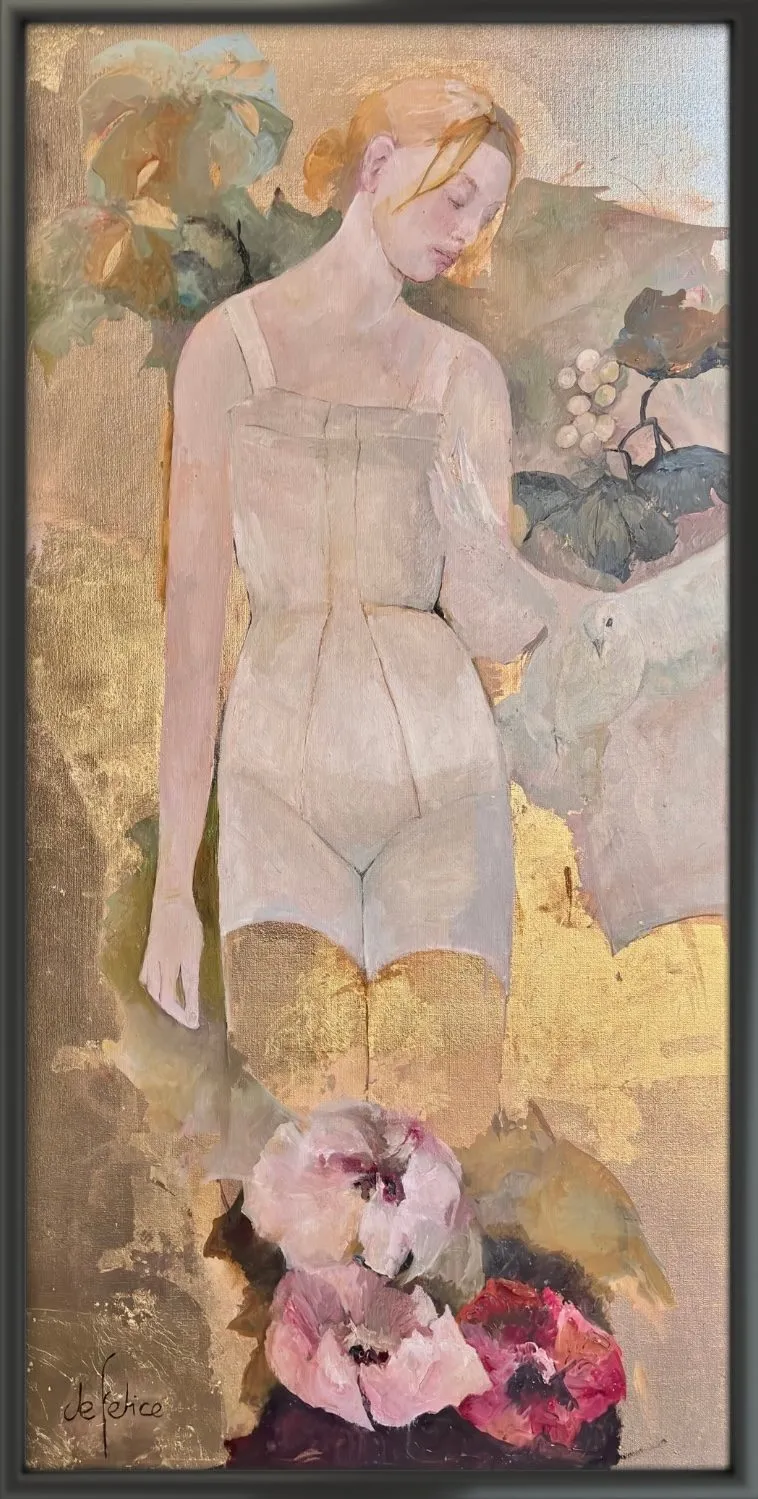
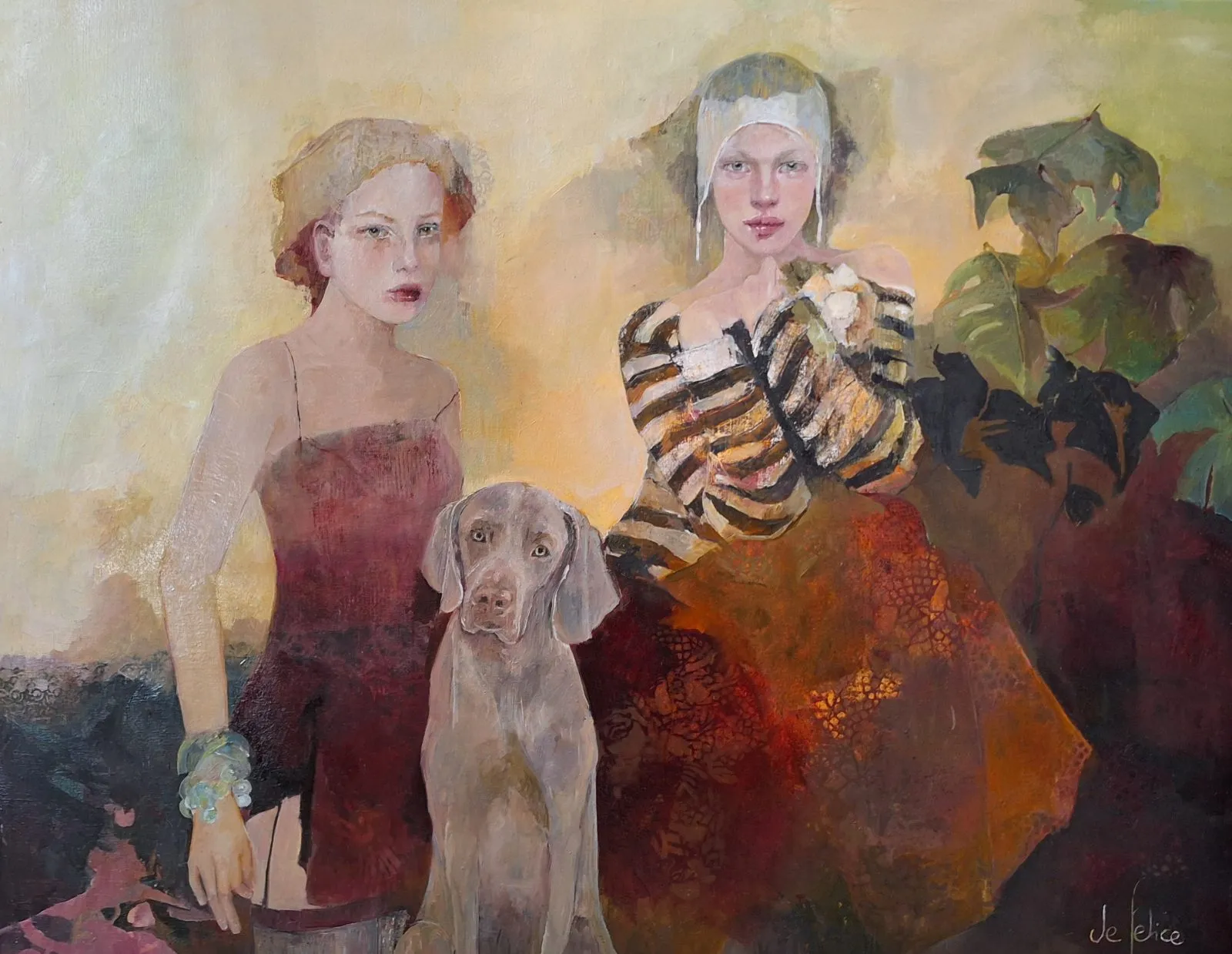
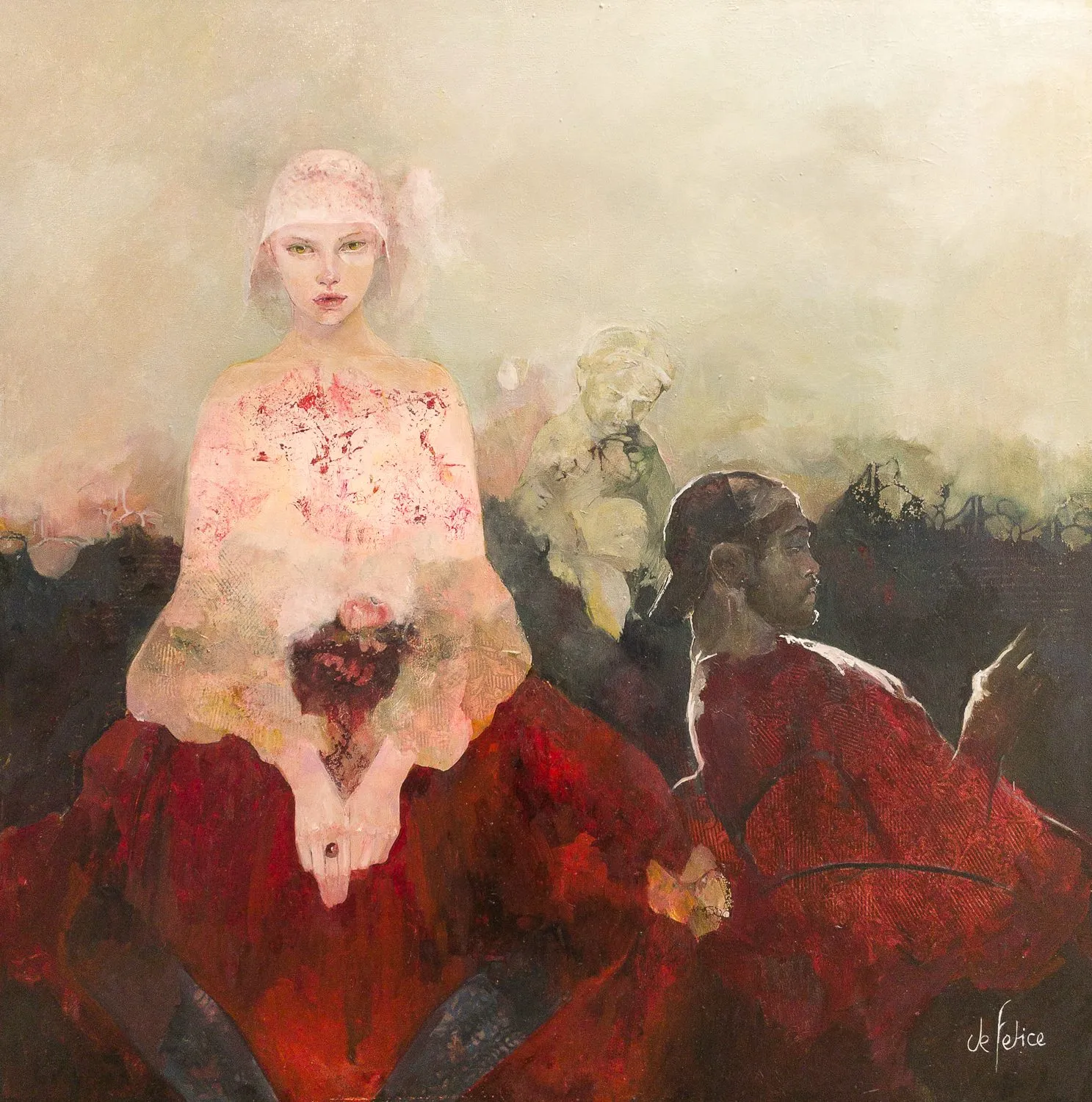
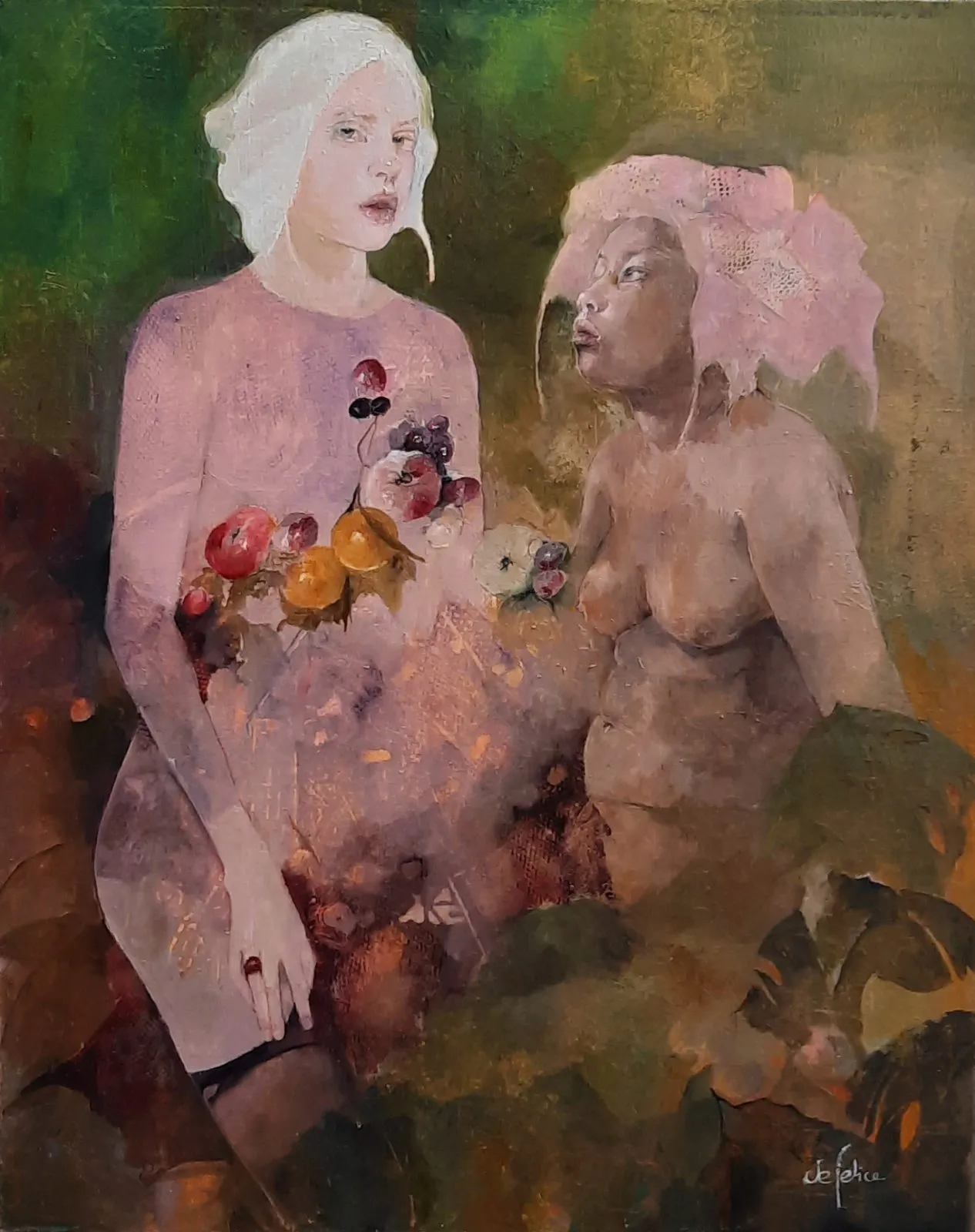
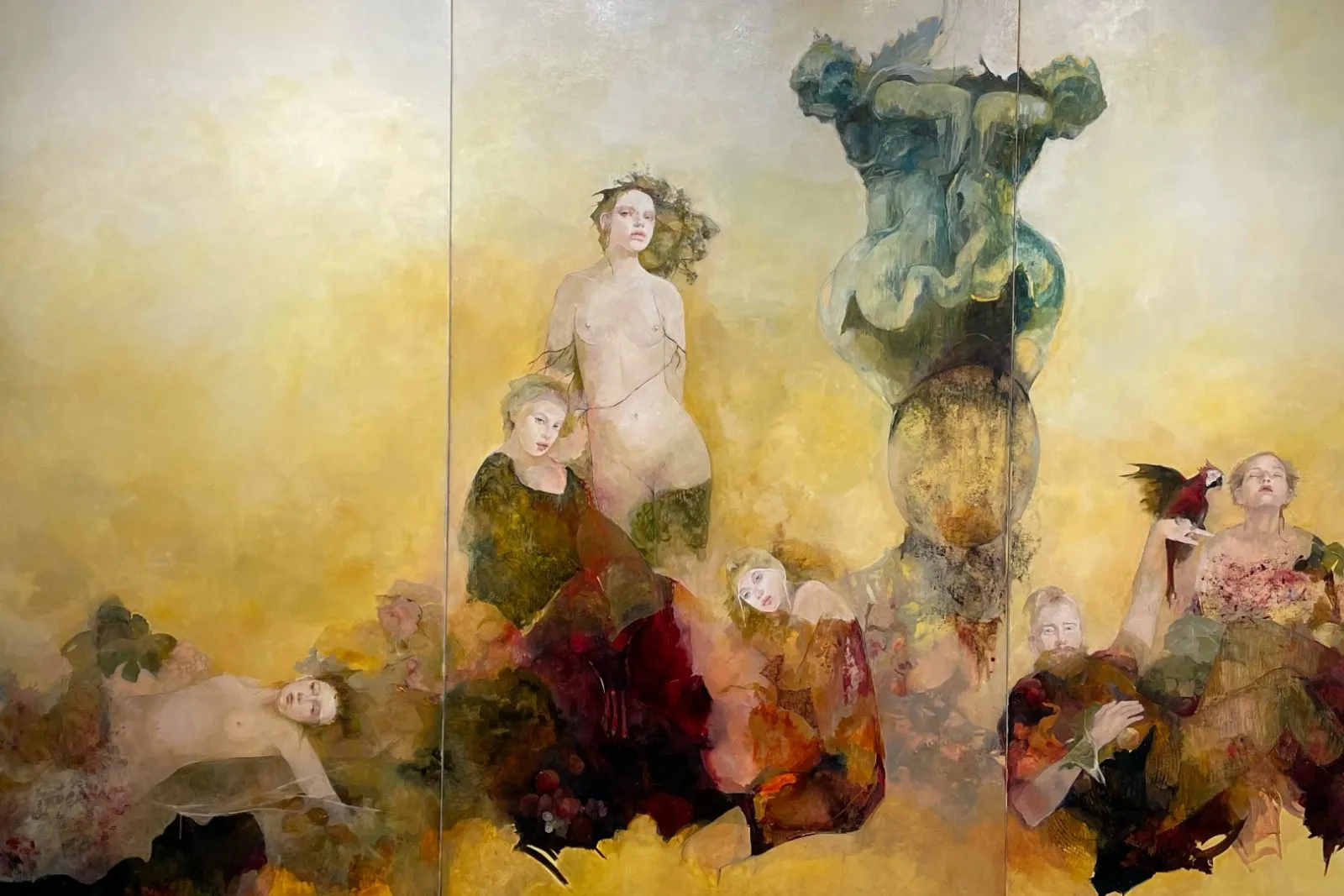
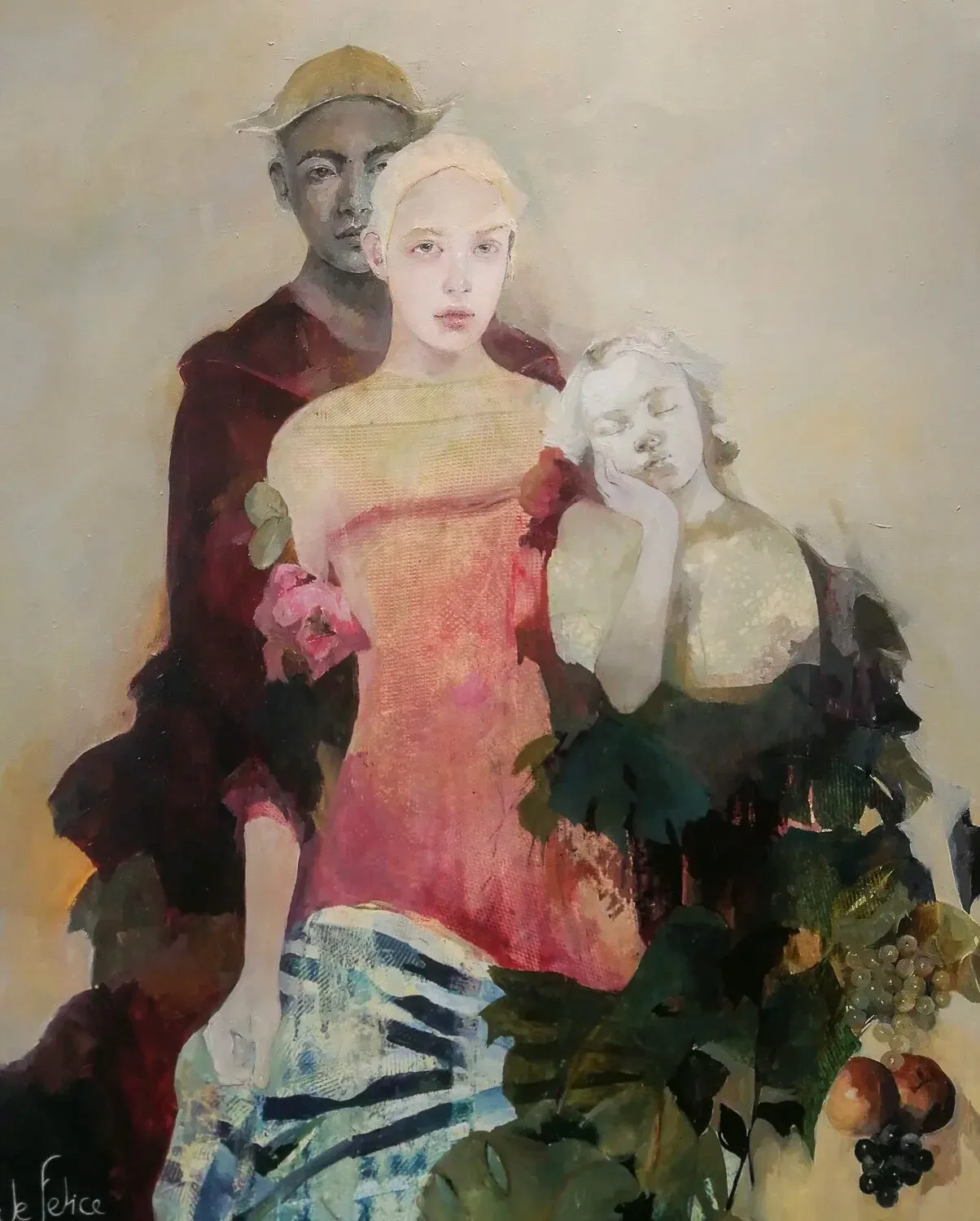
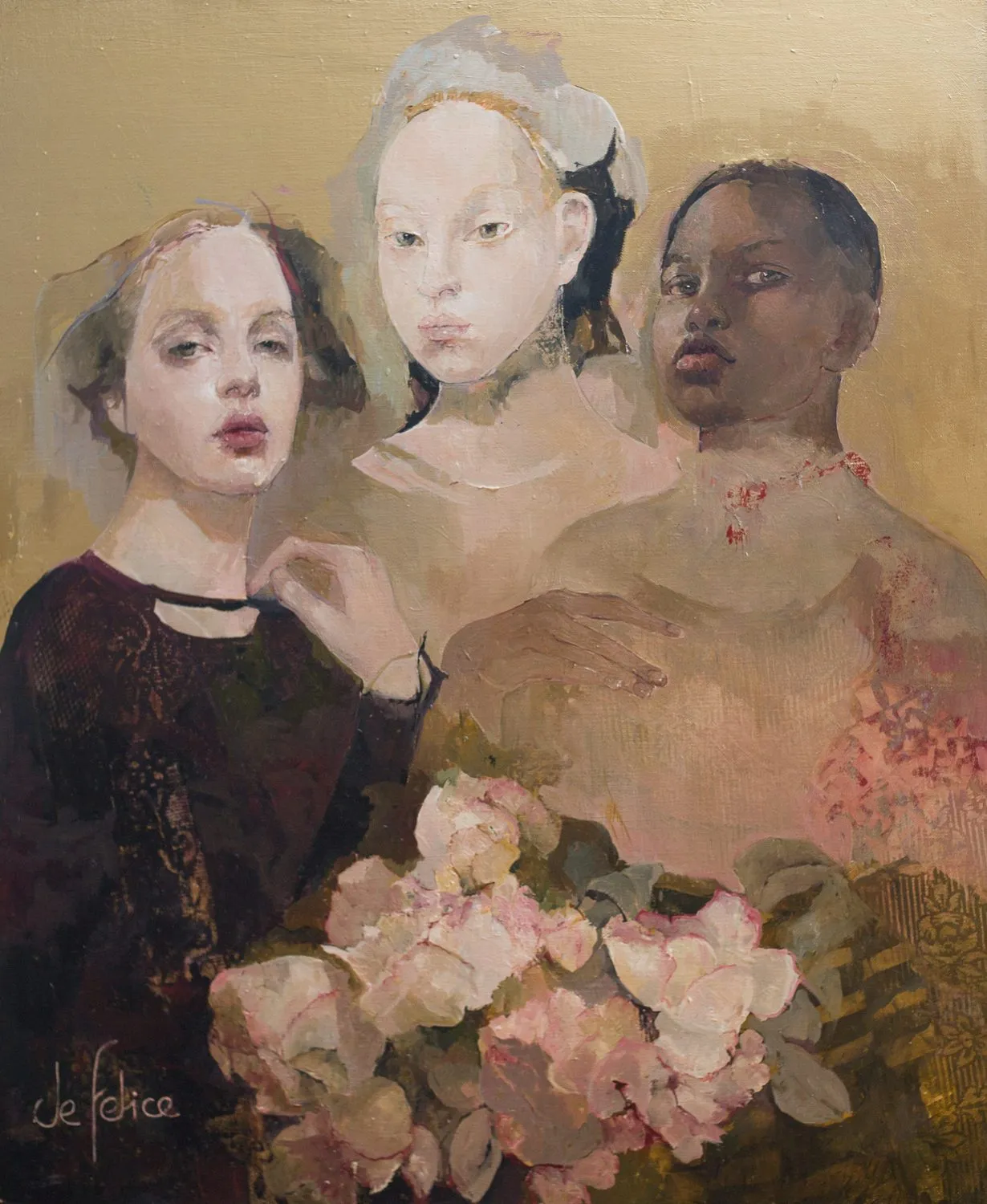
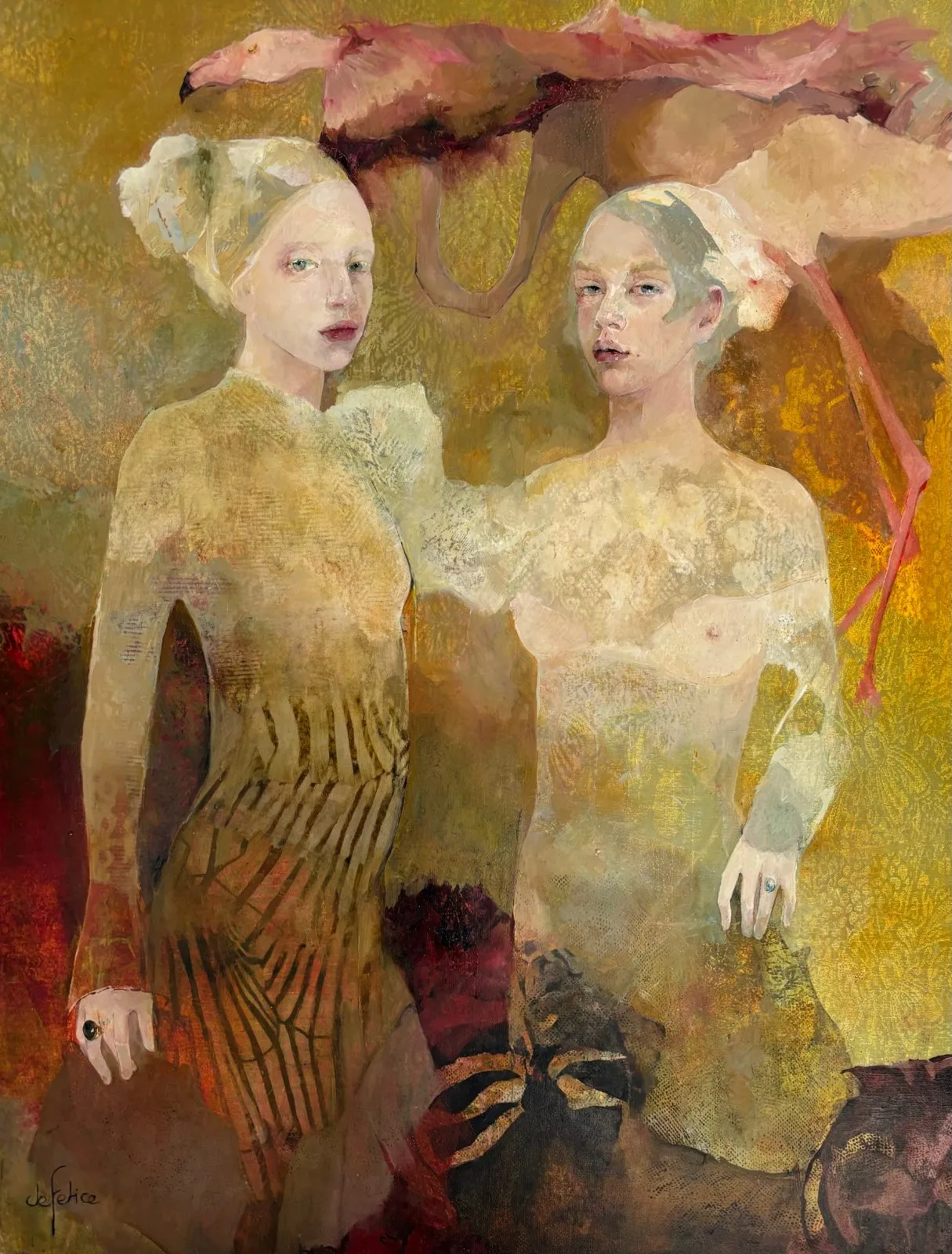
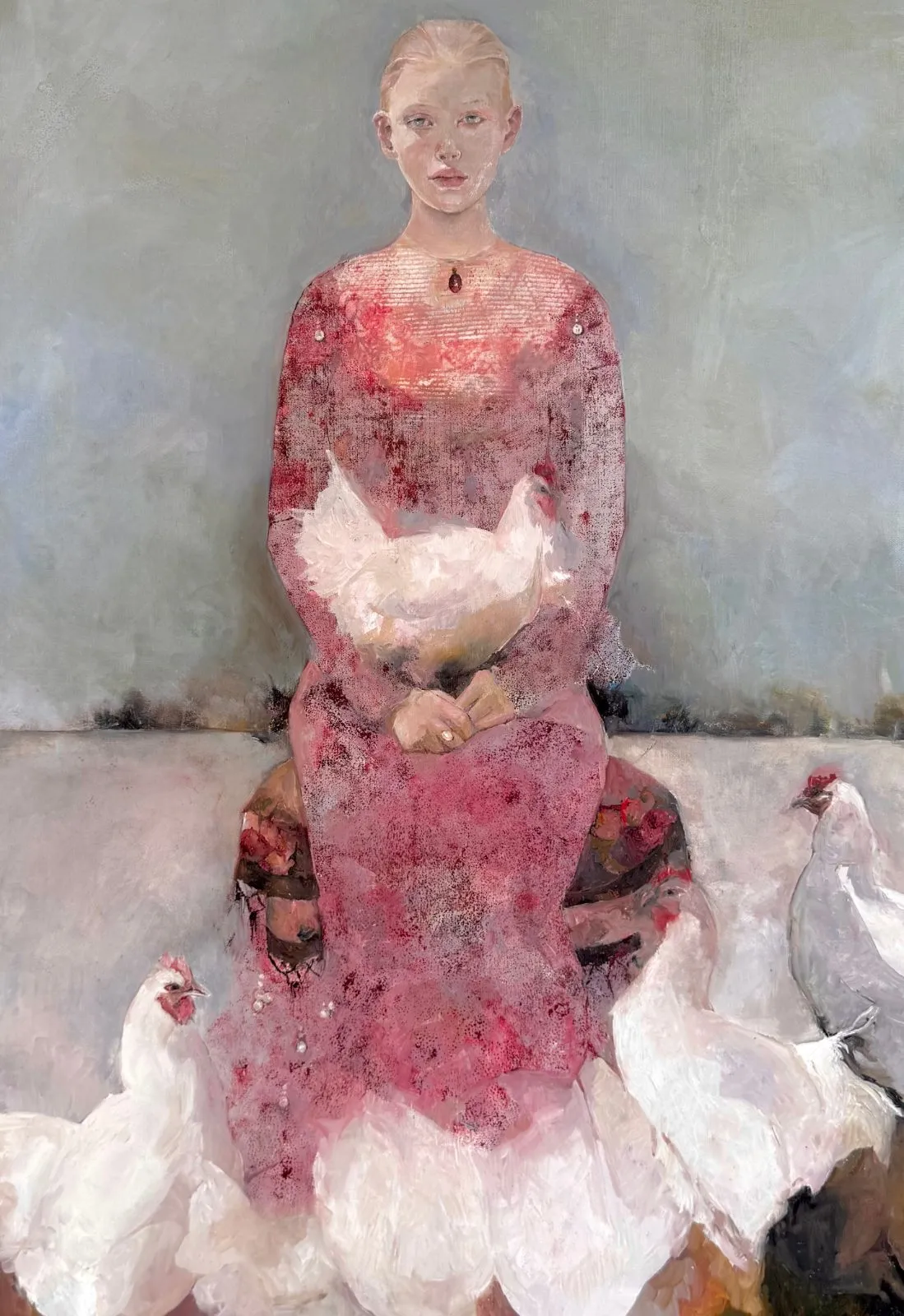
Françoise de Felice paints in oil on canvas. Her style was born, she says, "of chance and will intertwined": an accidental drip opened the way to a treatment of almost liquid blends, countered by a fine but precise line. From this tension between the blurred and the sharp comes the suspended atmosphere of her canvases. The motif is almost always feminine. Female figures, often isolated from any setting, sometimes accompanied by animals, flowers, fabrics, parasols or still lifes, occupy the centre of the composition and look straight at the viewer. Her palette pairs pastel tones with luminous accents of gold or bright red, and her vocabulary draws on the history of Western painting — Tiepolo's pinks, Vermeer's light, the faces of the Renaissance. The artist claims an introspective painting, "a kind of self-analysis": a world of children, doubles and figures who return from one canvas to the next like the characters of a single inner novel. She speaks of it as a store of intimate images: "It is a Pandora's box from which all my dreams spring…". For her, the eyes of her figures have a metaphysical value and seek to transcend the ordinary; mythology, a touch of darkness and a quest for the ethereal mingle there. Apparent gentleness thus sits alongside a muted unease, and it is this double register — delicacy and assurance, beauty and melancholy — that her commentators most often note.
Biography
Françoise de Felice was born in Paris in 1952, to a father of Italian descent and a French mother. She spent her first twenty years in Paris. As a child she was introduced to graphic art by her grandmother, who had attended an advertising studio in the days of the Chat Noir, next door to Fernand Léger's. Alongside studies at the Sorbonne, she attended classes at the Beaux-Arts as a non-enrolled student. Her first approach was Impressionism, which she explored in all its forms until 1982. She then left France for Sicily, the land of her father's family, where French Impressionism was no longer enough for her: the splendours of Sicilian Baroque and the light of the island led her to build a language of her own. After several journeys back and forth between the Mediterranean and France, she continued her work in France, where she exhibits continuously. Her exhibition history began in 1976 in the Canary Islands, at the Hispanic Institute, and continued in Venice, Rome, London, Monaco, Deauville, Caen and Paris — notably at the Carrousel du Louvre in 1999 and the Orangerie du Sénat in 2015 — then at the Le Ciminiere Museum of Modern Art in Catania in 2006. Between 1979 and 2016 she received some ten prizes and distinctions, including the Madeleine Coudrec Prize of the Fondation Taylor in 2016. She is represented by Galerie Calderone, where she has exhibited since 2010, and by several galleries in Belgium, Italy and France: Latem Gallery, Down To Art, Galerie À La Folliette, Galerie Albane and Antonella Scarfone Gallery.
Available works
22 available works
Exhibitions
1976 — 2026
Awards
1979 — 2016
Where to see the work
The works of Françoise de Felice are on view at Galerie Calderone, 20 rue Levavasseur, Dinard, and from summer 2026 at 14 rue Joseph Quaranta, Saint-Tropez.